The Truth About DOMS: Why You’re Sore and What Actually Helps
You smashed a great session. Felt strong, felt accomplished, walked out on a high. Then two days later you try to sit down on the toilet and your legs stage a full revolt.
Welcome to DOMS.
If you’ve ever been so sore after a workout that walking down stairs became a genuine event, you’ve met Delayed Onset Muscle Soreness. It’s one of the most common experiences in training, and also one of the most misunderstood. There’s a lot of myth floating around about why it happens and what fixes it, so let’s clear the air with what’s actually true.
First, What Is DOMS?
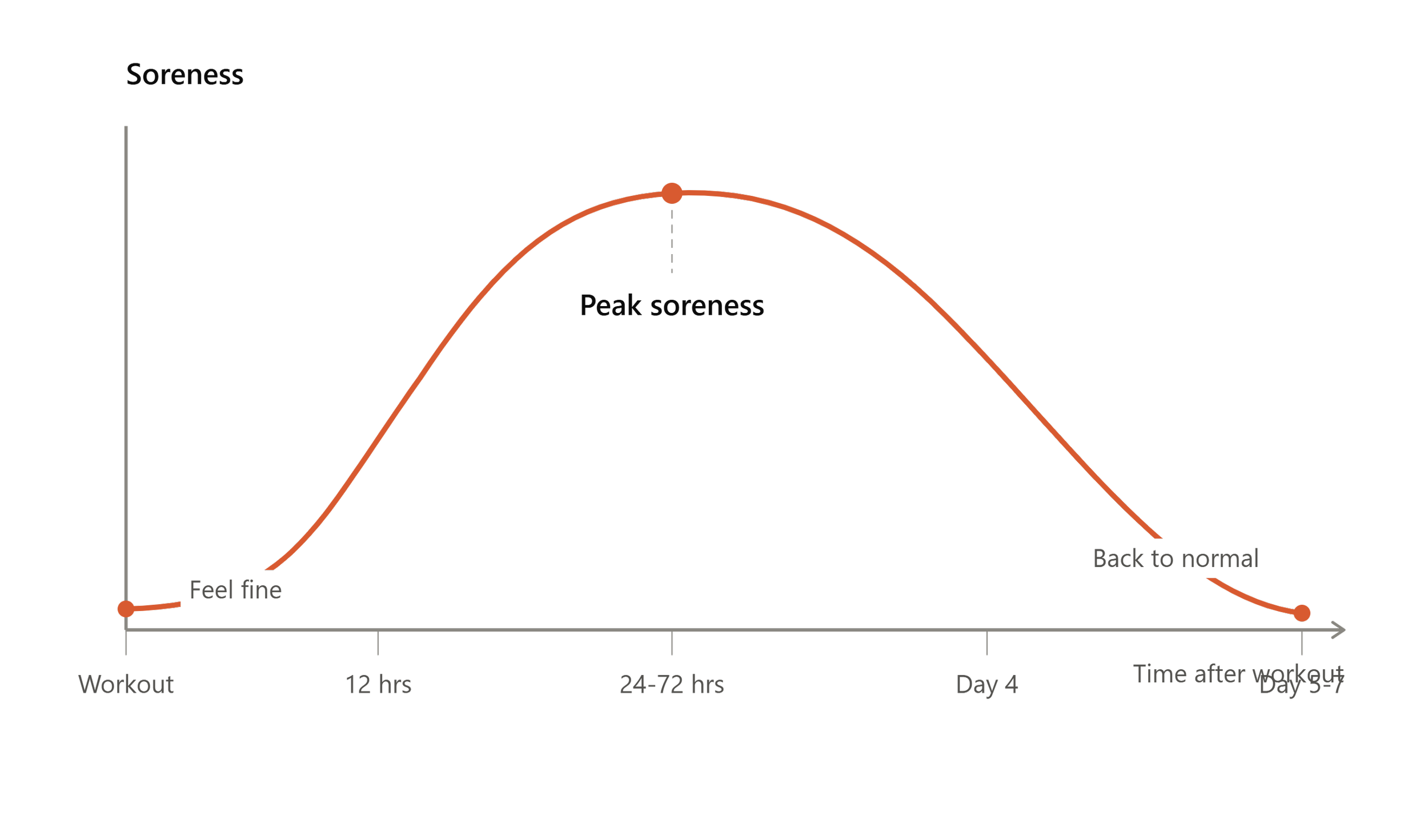
DOMS stands for Delayed Onset Muscle Soreness, and the “delayed” part is the key. It’s that stiffness and tenderness that shows up not during your workout, not straight after, but a day or two later. It typically peaks around 24 to 72 hours post-session, then gradually fades.
It tends to show up most when you’ve done something your body isn’t used to: a new exercise, heavier weights than usual, more volume than normal, or a big dose of “eccentric” work (the lowering part of a lift, like the way down in a squat or the lowering of a dumbbell curl). Come back to training after a break and you’ll often get a solid hit of it too.
So that’s the what. Now let’s bust the biggest myth about the why.
The Lactic Acid Myth (It’s Not What’s Making You Sore)
Here’s the one almost everyone gets wrong. For decades, people have blamed DOMS on “lactic acid building up in the muscles.” You’ve probably heard it. You may have even said it.
It’s not true.
Lactic acid (or more accurately, lactate) is produced during hard efforts, yes, but it clears out of your muscles within an hour or so of finishing your workout. It’s long gone by the time DOMS shows up a day or two later. Blaming your two-days-later soreness on lactic acid is like blaming yesterday’s traffic jam for making you late tomorrow. The timing simply doesn’t add up.
(If you want the full story on what lactate actually does, and why it’s not the villain it’s made out to be, we covered it in our Energy System Development series.)
So if it’s not lactic acid, what is it?
So What Actually Causes DOMS?
The honest answer: scientists don’t have it 100% nailed down, but the current understanding is pretty clear on the basics.
DOMS is caused by tiny amounts of microscopic damage to your muscle fibres and the connective tissue around them, triggered by unfamiliar or demanding exercise. This isn’t the scary kind of damage. It’s the normal, expected response to challenging your muscles in a new way.
That micro-damage kicks off a natural inflammation and repair process. Your body rushes in to repair the tissue, and that repair process, the inflammation, the fluid, the sensitised nerve endings, is what you feel as soreness. Your muscles become temporarily tender and stiff while the rebuilding happens.
And here’s the important reframe: this repair process is exactly how you get stronger. The muscle rebuilds slightly more robust than before. So DOMS, within reason, is a sign your body is adapting. It’s not a sign you’ve done damage you should worry about.
Does More Soreness Mean a Better Workout?
Nope. This is the second big myth worth busting.
A lot of people treat DOMS as a scorecard: “I’m wrecked, so that must’ve been a great session.” But soreness is not a reliable measure of how effective your workout was.
Here’s why. DOMS is mostly about novelty, how unfamiliar the stimulus was, not how productive it was. A brand new exercise might leave you crippled while producing modest results. Meanwhile a well-programmed session using movements your body knows well might leave you barely sore while driving excellent progress.
In fact, as you get fitter and more consistent, you’ll often get less sore from the same training, even as you’re getting stronger. That’s called the “repeated bout effect,” your body adapts and stops overreacting to a stimulus it’s seen before. Less soreness, more progress. So chasing soreness for its own sake is chasing the wrong thing.
The best measure of a good workout isn’t how sore you are tomorrow. It’s whether you’re progressing over time: lifting a bit more, moving a bit better, recovering a bit faster.
You Do Not Need to Be Sore to Be Making Progress
This deserves its own spotlight, because it’s one of the most stubborn misconceptions in training.
Somewhere along the way, a lot of people absorbed the idea that if they’re not sore, they didn’t work hard enough, or the session “didn’t count.” It’s completely untrue, and believing it can actually hold you back.
Here’s the reality: soreness and progress are not the same thing. You can make outstanding progress with very little soreness, and you can be absolutely wrecked from a session that did very little for you. As your body adapts to consistent training, it stops getting sore from familiar work, even as you keep getting stronger. That’s not a sign you’ve plateaued. It’s a sign you’re adapting beautifully.
If you chase soreness as the goal, you’ll end up constantly changing your program, adding unnecessary volume, or avoiding the consistency that actually drives results, all in pursuit of a feeling that doesn’t measure anything useful.
So let go of “no pain, no gain.” A productive training week might leave you pleasantly worked, mildly sore now and then, or barely sore at all. All of those can be exactly right. Judge your training by your progress over time, not by how hard it is to walk the next morning.
What Actually Helps DOMS (and What Doesn’t)
Here’s the honest rundown on recovery. Some things genuinely help, some are a waste of time, and some are just “feels nice but doesn’t do much.”
Things that genuinely help:
Light movement. This is the big one. Gentle activity, a walk, an easy bike, some light mobility, increases blood flow and tends to ease soreness more than lying completely still. Moving when sore feels counterintuitive, but it works. This is why an active recovery day beats a total couch day.
Sleep. Your body does most of its repairing while you sleep. Good sleep is genuinely one of the most powerful recovery tools you have, and it’s free.
Decent nutrition and protein. Giving your body the building blocks to repair (enough overall food, enough protein) supports the recovery process.
Time. The least exciting answer, but the truest. DOMS resolves on its own within a few days no matter what. Everything else just makes the wait a bit more comfortable.
Things that feel nice but don’t do much (fine to enjoy, just don’t expect miracles):
Stretching. Feels good, won’t meaningfully reduce DOMS. Do it if you enjoy it.
Foam rolling and massage. Can genuinely make soreness feel better in the moment, but it’s temporary relief rather than faster healing. Still worth doing if you like it.
Ice baths and heat. Mixed evidence at best. Some people swear by them, but they’re not the magic recovery fix they’re often sold as. (And ice baths may even slightly blunt muscle-building adaptations if overused, so don’t go overboard.)
Things that won’t fix it:
Pushing through with another brutal session on the same muscles. Training hard again on already-sore muscles before they’ve recovered isn’t “toughening up,” it’s just digging a deeper hole.
Any supplement claiming to “eliminate” soreness. Save your money.
Should You Train When You’re Sore?
Common question, and the honest answer is: it depends on how sore.
Mild to moderate soreness? Usually fine to train. In fact, light-to-moderate training often helps it ease. You can train other muscle groups freely, or do a lighter session on the sore ones.
Severe soreness (struggling to move properly, significant loss of strength, pain rather than tenderness)? Back off. Give those muscles more time, do some light movement elsewhere, and come back when they’ve settled. Training hard through severe soreness increases injury risk and doesn’t speed anything up.
A good coach will program around this, which is one of the quiet benefits of training in a structured, coached environment rather than just smashing yourself at random.
A rare but important warning: rhabdomyolysis
This one’s uncommon, so don’t panic, but it’s worth knowing about because in serious cases it can be genuinely dangerous.
Rhabdomyolysis (often shortened to “rhabdo”) is a condition where muscle tissue breaks down far more than normal and releases its contents into the bloodstream. Those released substances, particularly a protein called myoglobin, can overwhelm the kidneys and, in severe cases, lead to kidney damage or other serious complications.
It’s usually triggered by extreme, excessive exercise, especially doing far too much, too soon, with little recovery. Think a complete beginner being thrown into a brutal high-volume session, someone returning from a long break and going all-out, or a punishing workout done in intense heat without enough hydration. Training hard on top of already severely damaged muscles, before they’ve had any chance to recover, is exactly the kind of thing that stacks the risk.
The warning signs to take seriously:
Severe, unusual muscle pain or swelling well beyond normal soreness
Muscles that feel weak or “dead” rather than just tender
Dark, cola-coloured urine (this is the classic red flag)
Feeling generally unwell, nauseous, or confused after extreme exercise
If you ever notice dark urine alongside severe muscle pain after a heavy session, don’t wait it out. Seek medical attention promptly. It’s rare, and the vast majority of gym-goers will never experience it, but it’s one of those things where knowing the signs genuinely matters.
The good news: rhabdo is almost entirely avoidable with sensible, progressive training. This is precisely why we don’t throw people into the deep end at Fortified Body. Building up gradually, respecting recovery, and earning the right to push harder isn’t just about better results, it’s about training safely.
The Bottom Line
DOMS is normal. It’s not caused by lactic acid, it’s caused by your muscles repairing and adapting after unfamiliar or demanding work. It’s not a reliable scorecard for how good your workout was, and it tends to fade as you get fitter and more consistent.
The best things you can do about it are gloriously simple: move a little, sleep well, eat enough, and give it time. Everything else is optional comfort.
And here’s the reassuring part, especially if you’re new to training: that brutal soreness in your first few weeks? It gets dramatically better as your body adapts. It’s a phase, not a life sentence. (We walked through exactly what to expect in those early weeks in our post on what happens when you start lifting.)
So next time you’re walking down stairs like a newborn giraffe two days after leg day, take comfort. Your body isn’t broken. It’s building.
Want Training That Progresses You Properly?
Soreness is a normal part of training, but smart, structured programming means you progress steadily without being needlessly wrecked every session. That’s the difference between random hard workouts and proper coaching.
At Fortified Body Gym in Willoughby, every session is coached and progressed intelligently, so you build real strength without burning yourself into the ground. We meet you where you are and take you forward, one well-planned step at a time.
Book your free trial week here and feel the difference proper coaching makes.
This article is general information, not medical advice. If you’re ever concerned about severe symptoms after exercise, seek advice from a qualified health professional.